15 October 2007

Luscious Lemon Layer Cake

Lemon Layer Cake (with title)
It's rare that you hear someone making a whole cake to use up leftover lemons, but if you bake as often as I do, you will have pounds of butter, dozens of eggs, jars of flour, and mountains of sugar just waiting to be used at the moment's notice. It's often much easier than having to go to the "farmer's market" specifically for fresh seafood to be cooked with the lemon, not to say that I didn't wish the fishmonger was just next door (at least I'd gain less pounds that way).
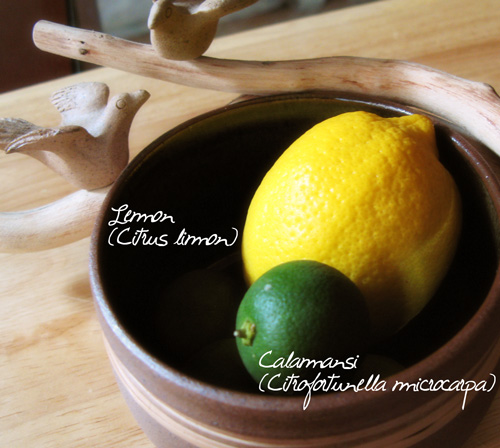
Lemon and Lemon
Because I didn't have enough lemon juice, I filled in the requirement with Philippine Lemon (Calamansi) juice-- very similar but slightly sourer. The resulting lemon curd was as perfect as could be. I love that this cake is so complex and requires care to make, but it still has "home baking" written all over it. Nothing convoluted about it. (Recipe follows)
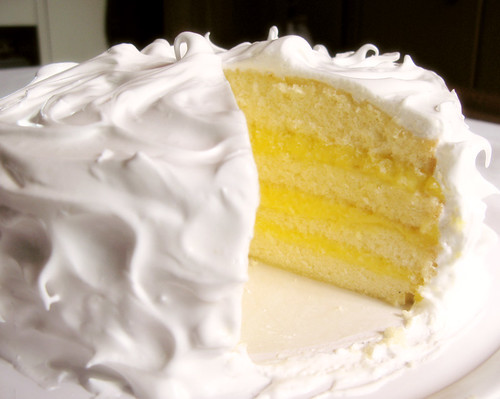
Lemon Layer Cake (whole)
The procedure for making white cake here is the most unique one I've ever seen, but I barely deviated from the procedure because I wanted to try it out. The crumb is perfect, but barely different from the usual method for making butter cakes. I changed the procedure for making lemon curd to resemble Pierre Hermé's method more, because it's easier, and I deviated slightly in making the icing as I wasn't really bothered making it entirely over the stove (my arms can take a lot of punishment, I guess).

Lemon Layer Cake

  • 1 cup (250g) lemon juice from 6 lemons, or combination Lemon-Calamansi (3 lemons and about 12 Calamansi)

  • 1 teaspoon powdered gelatin

  • 1-1/2 cups (300g) granulated sugar

  • 1/8 teaspoon salt

  • 4 large eggs

  • 6 large egg yolks

  • 1 stick (115g) unsalted butter, cut into 1/2-inch cubes and frozen

Take 1 tablespoon of the citrus juice and place into a bowl. Sprinkle the gelatin on top and set aside. In a heavy-bottomed saucepan, combine the remaining citrus juice, sugar, and salt and set over medium-high heat until the sugar just dissolves (you can see all of the bottom of the pan at this point; avoid letting it boil). Place the eggs and yolks in a large bowl and whisk together. Still whisking vigorously, add half the hot juice in a thin stream, then you can liberally add the rest while whisking. Return to the stove over low-medium heat, stirring constantly until a thermometer registers 170°F (77°C) or the curd coats the back of the spoon and a track drawn through it doesn't fill with the curd (the mixture will have been boiling for about 1-2 minutes). Take off the heat and stir in the juice-gelatin mixture. Strain using a fine-meshed sieve into a blender. By this time it will have cooled to 140°F (60°C). Start the blender and drop the cubes of butter in one by one. When the butter is halfway in, stop the blender and scrape down the sides, then continue until all the butter is incorporated (the blender will not choke when the curd is smooth). If you don't have a blender, you can whisk the cubes of butter in but it will take longer to incorporate. Return to a bowl and let cool to room temperature, then place cling film flush against the surface, poke a few holes in the top and place in the fridge for at least 4 hours to firm up.
  • 2-1/4 cups (315g) cake flour, sifted

  • 1 cup (250g) whole milk at room temperature

  • 6 large egg whites

  • 2 teaspoons vanilla extract

  • 1-3/4 cup (210g) granulated sugar

  • 4 teaspoons baking powder

  • 1 teaspoon salt

  • 1-1/2 sticks (170g) unsalted butter, cut into 12 pieces, softened but still cool

Set a rack in the middle of the oven and preheat at 350°F (177°C). Grease and line 2 9-inch cake pans (at least 2 inches high). In a bowl, whisk together the milk, egg whites, and vanilla. In the bowl of a standing mixer with the paddle attachment (I used a hand mixer with the usual beaters; you could also probably use a pastry blender and a whisk if you have neither), mix together the flour, sugar, baking powder, and salt at low speed to combine. Add the butter one piece at a time until the mixture resembles moist crumbs without visible butter chunks. Add all but 1/2 cup of the liquid mixture and beat at medium speed until pale and fluffy (90 seconds). Switch to low speed and add the rest of the liquid, then beat at medium speed for 30 more seconds. Scrape the sides of the bowl and beat on medium speed for 20 more seconds. Divide the batter evenly between the 2 pans (use you scale if you have one), then spin the pans on the counter to spread the batter. Bake for 23-25 minutes or until a toothpick in the center comes out with very few tiny moist crumbs. Run a thin knife around the edges and cool in the pans for 10 minutes, then unmold and cool on a rack for at least 2 hours.

If the cakes have domed while baking, flatten the top of one with a long, sharp serrated knife. Divide the 2 layers horizontally into 2 layers each. Set one of the layers on a cake round or serving plate and spoon a third of the curd, evening out with a spatula. Set the second layer on top and repeat with the rest of the curd and the cake, finishing off with a domed cake layer if you have one. Smooth out the run-off on the sides and refrigerate.
  • 2 large egg whites, room temperature

  • 1 cup (120g) granulated sugar

  • 1/4 cup (60g) water

  • 1 tablespoon lemon juice or 1 teaspoon cream of tartar

  • 1 tablespoon corn syrup

Combine all the ingredients in a heatproof bowl set over a pan of simmering water. Using a hand mixer on high speed, beat until the mixture holds stiff peaks (when you lift the beaters, the tips of the peaks on the surface will not droop), about 7-10 minutes. Take off the heat and cool to room temperature. Spread the frosting on the cake.
14 October 2007

Silent All These Years

October is breast cancer awareness month (I've yet to concretely do anything about it since I've graduated from med school, but for now, I encourage all female readers to do the BSE and a mammmogram over the age of 40 in the absence of any obvious masses). It got me thinking about other women's issues in my country.

Most days out of the week, there are certain tabloids that instead of trumpeting the latest economic crisis or government corruption scandal, have the latest (?) rape case as its headline. In bold, red letters, you can catch up on the latest episode of grotesqueness:
SANGGOL GINAHASA NG AMA (Infant raped by father)
7-TAONG GULANG HINALAY NG ADIK (7 Year-old Molested by a Drug Addict)
LOLA, GINAHASA AT PINATAY (Grandmother, Raped and Killed)

These aren't headlines that I lifted from any specific tabloid from any specific day, but in my country those patterned headlines are sickeningly familiar. (* Disclaimer: I have almost no way of knowing if these headlines are fabricated.) Which begs the question: fabricated or not, who is the target audience of these tabloids? Men, who are warned of the consequences of such debauchery, or women, who are warned of the evils that may exist within the four walls of their home? Most rapes are committed by non-strangers in familiar situations. I've personally known at least two people who have been molested, and the culprits, members of their own families, were never reported to the authorities. From these it's clear that rape is a violation of the body and a violation of trust, which in their own ways both lead to shame and silence.

For better or for worse, the tabloids continue to plaster the horrors that these victims face for all to see, breaking the silence in such a spectacular fashion, but oddly repetitive, that they seem to blend and become less important individually as each day passes, each week, year after year after year. Even less is being done to protect the rights of children, women, and the elderly. Drug use is still rampant among all social classes. (Lord knows what nightmares reside in these people's subconsciouses, unleashed once the drugs remove their inhibitions.)

Click here to hear a direct digital recording of me playing Tori Amos's "Silent All These Years."

I haven't yet given up on our society. I refuse to believe that rape is threaded through its fabric. Still, that doesn't make it easier to change. (Notes on the song and lyrics follow)

I'd first gotten to know Tori Amos in third year high school (ca. 2000), and in an all-boys' school that was unheard of. I watched her first on MTV Unplugged and I was enthralled by her skillful piano-wrangling and emotional performances. She'd just released her third album, Boys for Pele. Each time I raved about her music, all I really got was "Isn't she weird? Wasn't she nursing a pig on her CD?" (Just like for the rape victims, nobody really listens.) She's the main influence that got me playing the piano in the first place. She had also been a victim of rape. "Silent All These Years" is the first real piano piece I tried to learn. It's a song about refusing to be a victim and letting your voice be heard. So yeah, excellent message.

Excuse me but can I be you for a while
My dog won't bite if you sit real still
I got the anti-Christ in the kitchen yelling at me again
Yeah I can hear that
Been saved again by the garbage truck
I got something to say you know but nothing comes
Yes I know what you think of me you never shut up
Yeah I can hear that

But what if I'm a mermaid in these jeans of his with her name still on it
Hey but I don't care 'cause sometimes I said sometimes I hear my voice
And it's been here silent all these years

So you found a girl who thinks really deep thougts
What's so amazing about really deep thoughts
Boy you best pray that I bleed real soon
How's that thought for you
My scream got lost in a paper cup
You think there's a heaven where some screams have gone
I got 25 bucks and a cracker
Do you think it's enough to get us there

Cause what if I'm a mermaid in these jeans of his with her name still on it
Hey but I don't care 'cause sometimes I said sometimes I hear my voice
And it's been here silent all these

Years go by will I still be waiting for somebody else to understand
Years go by if I'm stripped of my beauty and the orange clouds raining in head
Years go by will I choke on my tears till finally there is nothing left
One more casualty
You know we're too easy

Well I love the way we communicate
Your eyes focus on my funny lip shape
Let's hear what you think of me now but baby don't look up
The sky is falling
Your mother shows up in a nasty dress
It's your turn now to stand where I stand
Everybody lookin' at you
Here take hold of my hand
Yeah I can hear them

But what if I'm a mermaid in these jeans of his with her name still on it
Hey but I don't care 'cause sometimes I said sometimes I hear my voice
And it's been here silent all these years
I've been here
Silent all these years

12 October 2007

Silk Handkerchiefs with Pesto Sauce

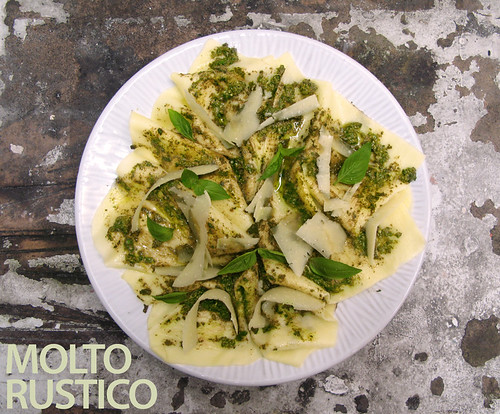
Fazzoletti di Seta al Pesto
Fazzoletti di Seta al Pesto (with title)
I get a few casual requests to cook for or teach people to cook (actually, replace "cook" with "bake" and that will be closer to the truth). One of the reasons I started blogging about food in the first place is to show people that we can all start from zero and make something we'd be proud of. We can all learn together, people! I'm not sure what possessed me one morning to wake up and decide that I would be cooking or baking at least one new thing each week, but it worked out and a few months later (yes, really), I have a bunch of new skills at my disposal. A lot of my friends eat at awesome restaurants regularly-- maybe I was inspired by envy?
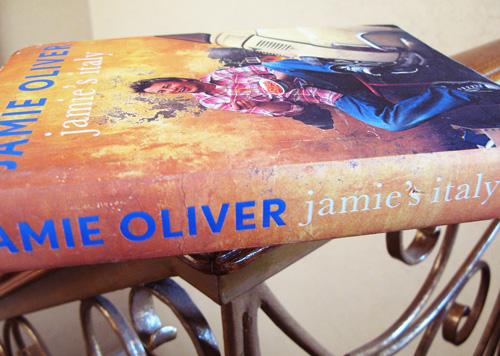
Jamie's Italy
Anyway, I was chatting with Graeme about Jamie Oliver and there's quite a bit of ridicult directed at him for being over-the-top and cloying (and some are cynical of his attempts to train disadvantaged people to become chefs), but I don't care (I realize I accidentally typed "ridicult" up there. I like it, it's my made-up word of the year.). The man can cook, and that's pretty much all that matters. I'm not much of a vegetable fiend but I'm learning, thanks to him (and cursing the lack of diversity in the markets, too, thanks to him). I'm grateful too, since his book that I picked up at a used/surplus bookstore (more on my obsession with used book sales in a later post) finally pushed me to make my own pasta due to its gorgeous photographs. (Recipe follows)

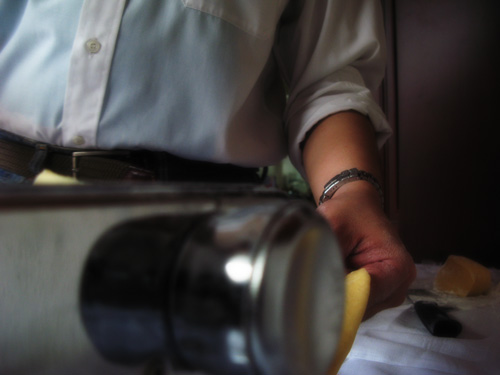
Pasta Machine
Me on the pasta machine with my amazing body that can stand to do a sit-up (or five hundred). The view could be better, but if I get a speck of flour in my brother's camera's lens, there would be a Cain and Abel situation going on.

Anyway. For each person you want to allow 85g (3 ounces or 1/2 cup plus 1 tablespoon) all-purpose flour and 1 large egg (or 2 egg yolks for a yellower pasta). The recommended flour is Italian Tipo 00 flour (soft, tender, fine-sieved), but good grief, don't kill yourselves, people. I'm feeding four, so I use 12 ounces of flour and 4 eggs. Make a well in the mound of flour on your clean, dry work surface (or bowl), then crack the eggs into the well. Using a fork, beat the eggs until smooth, then start incorporating the flour from the sides, taking care not to break the well until most of the flour is mixed into the eggs. When it has, flour your hands and start kneading the shaggy dough, letting all your frustrations out for at least 3 minutes, when your dough has turned silky and elastic. Wrap in cling film and leave in the fridge for at least 30 minutes while you work on the pesto.

For some reason we have basil growing in our backyard, so: organic pesto! It's very lemony and strong, and I'm not sure if it's Thai Basil but the stems aren't purple. Pick at the leaves and wash, then pat dry. I'm using a blender, which I think funnily enough is below the mortar and pestle (and way below the food processor) in the hierarchy of pesto-making. Unfortunately our mortar and pestle is tiny and did a very good job of making the leaves brown with my excessive pounding (heh), so I switched to a blender.

  • 3 good handfuls of basil leaves

  • 1 clove garlic, minced

  • 1 handful of pine nuts

  • pinch of salt

  • fresh-ground black pepper

  • good handful of freshly grated Parmesan cheese

  • at least 1/4 cup best-quality extra-virgin olive oil

Annoying ingredient list, eh? Welcome to Italian cooking. And good luck weighing basil leaves. In a food processor or mortar and pestle, grind up the leaves with the garlic, pine nuts, cheese, and salt. If using a blender, stop pulsing every now and then to drive leaves to the bottom with a long spoon. Jamie suggests that if you use the mortar and pestle, mash the pine nuts separately and mix in with the leaf mush. I don't know why. With the motor running, pour the oil in a thin stream until the resulting pesto is oozy. If using a mortar and pestle, you can just whisk in the olive oil. Give the pesto a taste and add black pepper to your taste, and more salt, if needed (I find that a healthy-sized pinch is required). Set aside.

Divide the pasta dough into as many sections as the number you'll feed. Set your pasta machine on the thickest setting for the rollers (7 on my machine), then run one of the dough balls through, then fold and repeat at least once more. You want the pasta to be about 3-4 inches wide, so manipulate the dough by folding and rolling to approximate this. It's my first time to use a pasta machine (for pasta at least), but my best advice is that after you've set the rollers to a thinner setting, you can no longer fold your pasta. It'll destroy your pasta.

Dust the rolled-out pasta with flour lightly, slapping out the excess. Set the rollers at the next-thickest setting (6 on my machine... obviously) and run the pasta through it twice. Cut the resulting long pasta into 2 shorter sheets so you can manage better. Continue the cycle (you don't usually need to dust it with flour again, though) of adjusting the rollers and running the pasta twice until you've made it very thin (2 on my machine, 1 being the thinnest). You should be able to kind of read a newspaper through it. Cut the long pasta sheets into coaster-sized portions and lay in one layer on a damp tea towel to prevent in from drying out while working on the other dough balls.

It may seem like a lot of work, but it is a lot of fun!

Anyway, bring about 1-1/2 gallons (5-6 liters) of water to a rolling boil and add a generous pinch of salt. Drop the silk handkerchiefs in, stirring occasionally to prevent sticking, and boil for 3 minutes. There won't be enough room to boil all of them at once, so use a strainer or a spider to fish them out into a colander while you work on the rest of the pasta. Reserve about a cup of the hot cooking water.
  • 100g (3-1/2 oz) Pecorino cheese

  • a handful of fresh baby basil leaves

Using a vegetable peeler, make a few shavings of the cheese. Grate the rest. Toss the cooked pasta with the pesto and the grated Pecorino cheese. If the pasta appears too tight, loosen it with the hot cooking water, a tablespoon at a time. Top with the basil leaves and Pecorino shavings.

11 October 2007

Medical School According to Peanuts


(Click on the image if you can't see all of it.)
There are two comic strips that are untouchable in my book: Calvin and Hobbes and Peanuts. Calvin and Hobbes is excellent because it depicts childhood and imagination as it is, while Peanuts is brilliant because it depicts adult behavior and philosophy through the actions of a cast of unforgettable children. (You can even teach Christian philosophy with it.) I have a few more wallowing in my collection, but for now, I'll give you Lucy experiencing the harsh reality of medical school. So true, Lucy... So true.

10 October 2007

Pineapple Upside-Down Cake

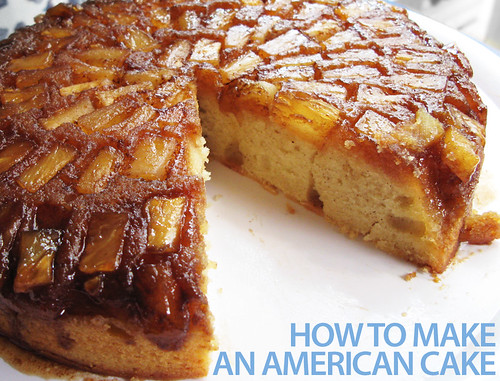
Pineapple Upside-Down Cake (with title)
I'm not sure if this is a contested fact, but the Pineapple Upside-Down cake just screams "American," which is strange because pineapples aren't a fruit associated with mainland America. I'll have to check what event in the sixties prompted thousands of homemakers to take notice of this treat, with its unfrosted face, gleaming with slick buttered pineapples and sometimes dotted with cherries. I am not even sure what about pineapple lends itself to adorning a humble butter cake instead of the less-popular but still delicious alternatives of stone fruits, cranberries, and apples. Maybe it's because it pairs with brown sugar so remarkably well that they can cut through plain cake and make no apologies for not having frosting. Whatever the reason, it perpetuates its existence through our cravings-- which is what happened with my mom when she saw it on display and wanted to buy one; I told her not to bother as it is much cheaper (and often more delicious) to make at home. (Recipe follows)

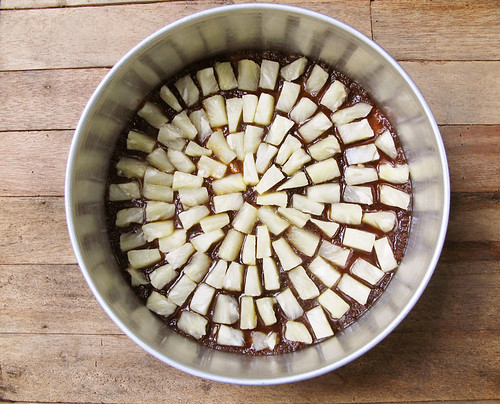
Pineapple Upside-Down Cake preparation
The problem was, many recipes call for fresh pineapple, which is really a bother as its ripeness is never guaranteed, and there's the business of peeling, coring, and slicing it, which are great skills but I'm not really up to at this time. Unfortunately, I miscalculated the amount of pineapple tidbits I'd need and opened a 450g can, which left a lot of gaps on top-- I wanted there to be no space so the surface would open up and be all porcupine-y. Oh well, a lesson for next time. Alternatively, you can use sliced pineapple and make the classic "target" patterns on top, or arrange them concentrically to form a giant flower. The choice is yours!

  • 1/2 stick (60g or 1/4 cup) unsalted butter, melted

  • 3/4 cup firmly packed (150g) light brown sugar

  • 1 836g can (2 pounds) pineapple tidbits, drained

At least a few hours before baking, place the pineapple tidbits between thicknesses of paper towels and weigh down in the refrigerator. Alternatively, you could pat the pineapple very dry with paper towels. Stir together the melted butter and brown sugar, then spread on the bottom of a 9-inch cake pan (that is at least 2 inches tall) that has been greased on the sides. Arrange the pineapple on the sugar mixture.
  • 1-1/2 cup (210g) all-purpose flour

  • 1-1/2 teaspoons double-acting baking powder

  • 1/2 teaspoon salt

  • 1/2 teaspoon ground cinnamon

  • 1 stick (120g or 1/2 cup) unsalted butter, at room temperature

  • 2/3 cup (140g) granulated white sugar

  • 2 large eggs, at room temperature

  • 1 teaspoon vanilla extract

  • 3/4 cup (190g) whole milk

Ingredient preparations: in a triple-sifter or a strainer, add the flour, baking powder, salt, and cinnamon, and sift over a bowl or some waxed paper. Add the vanilla extract to the milk and stir to combine.

Place a rack in the center of the oven and preheat the oven to 350°F (175°C). In a large bowl, cream the butter and sugar together using an electric mixer on high speed until light and fluffy (you can do this by hand but it will take a while). Add the eggs one at a time, beating on high speed after each until well-combined. Sprinkle 1/3 of the flour mixture and fold in. Add half the milk and beat until just combined. Repeat with another third of the flour and the rest of the milk, then fold in the last of the flour until just combined. Pour into the pan and spread evenly. Bake for 45 to 55 minutes, until a round toothpick inserted into the center comes out with only a few fine moist crumbs. Cool the cake in its pan on a rack for 15 minutes, then run a thin knife around the edge and lay the serving plate on top. Flip the set-up in a quick motion and cool the cake completely (or you may serve it slightly warm, with ice cream).